
The Bedford NY Homeowner’s Guide to Basement Finishing Contractors
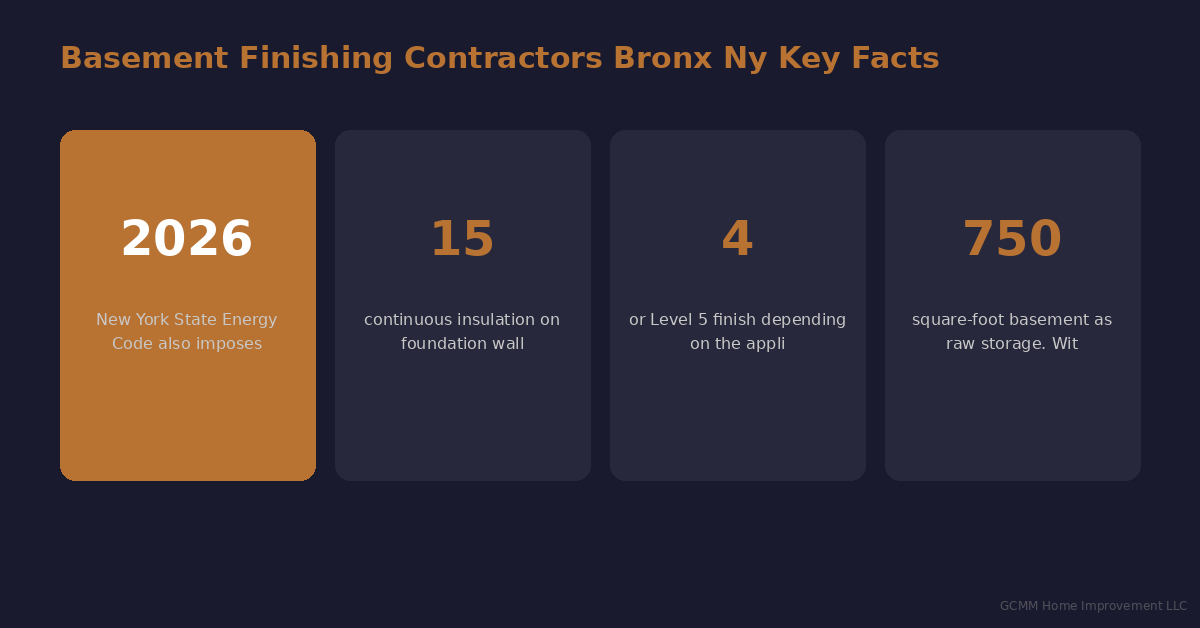
Basement finishing in Bedford, NY typically costs between $45,000 and $95,000 for the area’s larger colonial and estate-style homes, with projects averaging 600–1,200 square feet of usable space. A properly finished basement in Bedford’s high-value real estate market can add $60,000–$120,000 to your home’s resale value — often delivering a return exceeding the initial investment.
$1.2M+
Median Home Value in Bedford, NY (2026)
70–75%
Average ROI on Basement Finishing in Westchester
6–12 Weeks
Typical Project Timeline for Bedford Homes
20+ Years
GCMM Home Improvement Experience Serving Westchester
Bedford, NY consistently ranks among Westchester County’s most prestigious communities — a town where median home prices surpass $1.2 million and buyers hold their properties to exacting standards. Nearly 65% of Bedford’s housing stock consists of homes built before 1980, which means a significant portion of the town’s colonial estates, Craftsman-era residences, and mid-century contemporaries still carry raw, unfinished basement square footage that represents enormous untapped value. For homeowners in neighborhoods like Bedford Hills, Bedford Village, and Katonah, finishing that basement isn’t just a lifestyle upgrade — it’s one of the most strategically sound investments you can make in this real estate market.
What separates a successful basement finishing project in Bedford from one that stalls mid-construction is the experience of the contractor managing it. Bedford’s older homes frequently present conditions that a less seasoned contractor will handle poorly: fieldstone foundation walls requiring specialized waterproofing techniques, low ceiling heights demanding careful material selection, and Bedford Town Building Department permit requirements that must be navigated precisely to avoid costly delays. That’s where local knowledge pays dividends. GCMM Home Improvement LLC has been serving Westchester County homeowners for over 20 years, bringing licensed, insured craftsmanship to basement finishing projects across Bedford and the surrounding towns.
This guide is written specifically for Bedford homeowners evaluating a basement finishing project in 2026. We’ll walk you through realistic cost expectations for this market, what a typical project scope looks like for Bedford’s home styles, how to evaluate contractors, and what design trends are resonating with Bedford buyers and homeowners right now. By the time you’ve finished reading, you’ll have a clear picture of the investment ahead — and the information you need to choose the right contractor to execute it.
Basement Finishing Costs in Bedford, NY: What to Budget in 2026
Bedford’s position in northern Westchester means your project costs will reflect a specific combination of factors: larger-than-average basement footprints (many Bedford colonials have 800–1,400 sq ft unfinished basements), premium labor rates, and the technical complexity that older home construction presents. Unlike more densely developed Westchester communities, Bedford homes frequently have full-footprint basements beneath sprawling floor plans — meaning there’s more to finish, and more to get right.
Here’s a realistic cost breakdown for Bedford basement finishing projects in 2026:
| Project Scope | Square Footage | Estimated Cost Range | Typical Configuration |
|---|---|---|---|
| Basic Finish | 400–600 sq ft | $28,000 – $42,000 | Open rec room, basic bath rough-in, standard lighting |
| Mid-Range Finish | 600–900 sq ft | $45,000 – $68,000 | Multi-room layout, full bath, egress window, proper HVAC zoning |
| Premium Finish | 900–1,200 sq ft | $70,000 – $95,000 | Home theater, wet bar, full bath, home office, custom millwork |
| Luxury Estate Finish | 1,200+ sq ft | $95,000 – $150,000+ | Full in-law suite, multiple rooms, premium finishes throughout |
Per square foot, Bedford basement finishing typically runs between $65 and $115 per square foot depending on finish level, structural remediation needs, and the complexity of mechanical work. Basement projects in Bedford Hills — where homes along Guard Hill Road and Succabone Road tend to feature larger footprints — frequently land at the higher end of this range due to foundation depth, drainage management, and the custom millwork many homeowners specify.
Key cost drivers unique to Bedford include:
- Waterproofing and moisture management: Bedford’s terrain features significant topographic variation. Homes set into hillsides along roads like Depot Plaza or near the Mianus River watershed areas frequently require interior drainage channel systems and sump pump installations before any finishing work begins. Budget $4,000–$12,000 for waterproofing remediation if your basement has any history of moisture intrusion.
- Egress window installation: Bedford Town code requires at least one egress window or door for any habitable basement space. Cutting egress windows into poured concrete or block foundation walls runs $2,500–$4,500 per opening in this area.
- HVAC extension: Many Bedford homes have heating systems that weren’t designed to service the basement. Adding a properly zoned heating and cooling circuit typically adds $3,500–$7,000 to the project.
- Permit fees: Bedford Town building permits for basement finishing projects typically run $800–$2,200 depending on project valuation and scope of mechanical work.
Comparing Bedford to nearby towns is instructive. A similar scope project in Mount Kisco might run 5–10% less due to smaller average footprints, while projects in New Castle are often priced comparably to Bedford given similar home profiles and real estate values.
Pro Tip
Always request that your contractor separate the waterproofing quote from the finishing quote. These are distinct scopes of work, and bundling them together in a single number makes it harder to evaluate what you’re paying for each phase. A reputable contractor will have no problem breaking this down transparently.
A Typical Basement Finishing Project in Bedford, NY
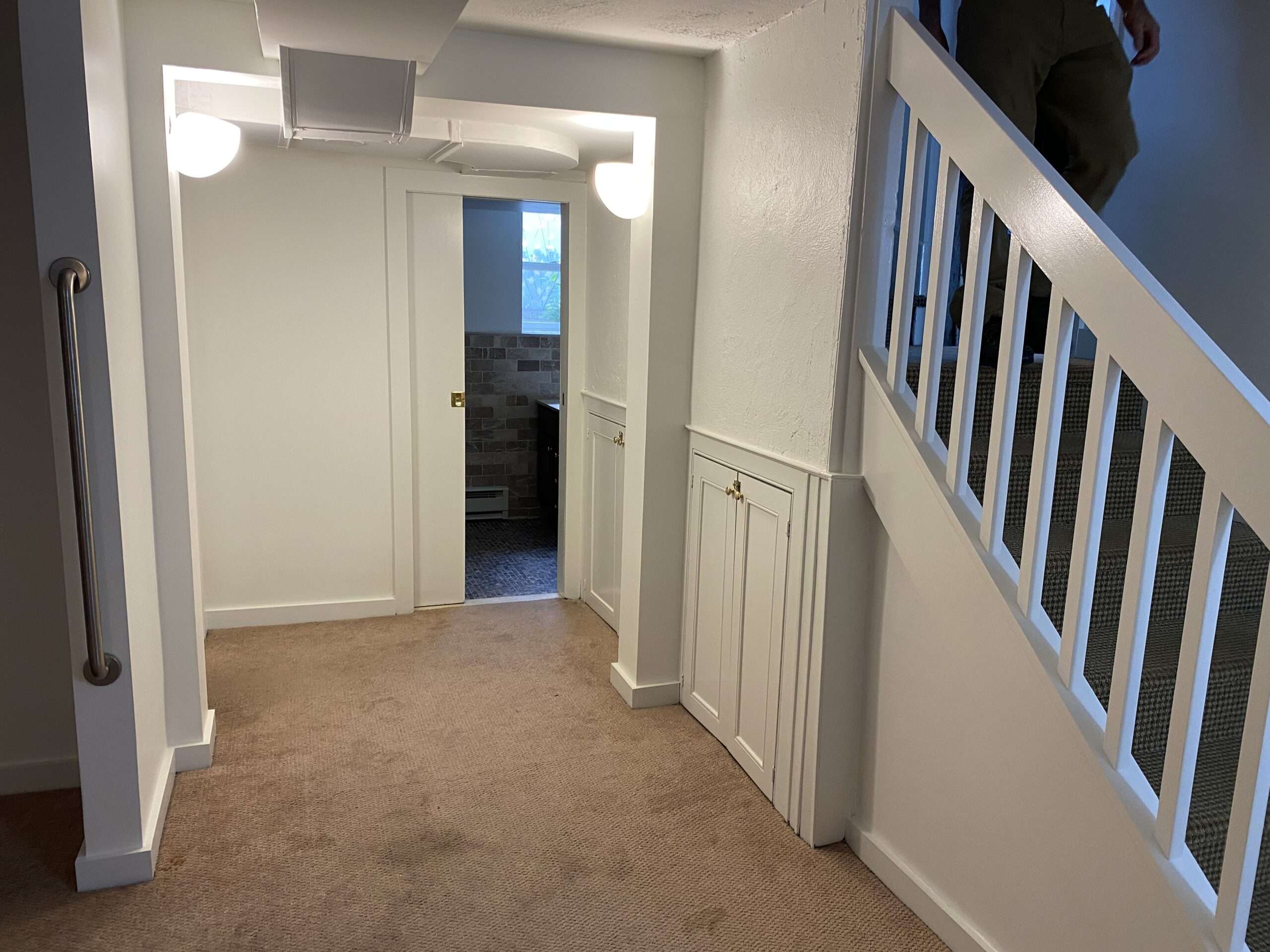
To give Bedford homeowners a concrete picture of what this process looks like in practice, here’s how a typical basement finishing project unfolds in this area.
The property: A four-bedroom colonial on a half-acre lot in Bedford Hills, built in 1968. The basement measures approximately 950 square feet with a poured concrete foundation, 8-foot ceiling height (a favorable condition), and a single utility area housing the furnace and hot water heater. The homeowner has used it for storage for years. There’s no evidence of active water infiltration, but there are historic staining lines on the foundation wall suggesting occasional minor seepage from a previous period before grading was corrected.
Common challenges in this scenario: The foundation wall staining warrants inspection before any finishing begins. Even absent current leakage, Westchester County’s clay-heavy soils can cause hydrostatic pressure shifts after heavy rain events, particularly given Bedford’s hilly topography. A responsible contractor will assess whether an interior drainage channel should be installed as a precaution — typically a $6,000–$9,000 addition — rather than finishing over a potentially vulnerable wall. Additionally, the home’s oil-fired forced-air system was not designed to service the basement level, requiring a new branch takeoff and return air path.
Typical scope for this type of project:
- Moisture assessment and installation of a perimeter drainage channel with a battery-backup sump system
- Framing interior stud walls 1.5 inches off the foundation (critical for moisture management — never frame tight against concrete)
- Closed-cell spray foam insulation applied to the rim joist areas; rigid foam insulation on lower wall sections
- Egress window installation in the above-grade portion of the rear wall
- Electrical rough-in: 15 circuits for lighting, outlets, and dedicated circuits for home theater and wet bar
- HVAC extension: two supply registers and one return in the main space, electric baseboard heat in the bathroom
- Full bathroom with subway tile, frameless shower enclosure, and vanity
- Drywall, paint, and 5-inch engineered hardwood flooring on a sleeper subfloor system
- Built-in shelving in the home office zone
Realistic timeline: Permit application submission takes approximately 2–3 weeks in Bedford Town. Once permits are issued, construction typically proceeds over 8–10 weeks. The overall project — from initial consultation to final walkthrough — spans 12–16 weeks for a project of this scope.
Expected outcome: Approximately 750 square feet of finished living area (after accounting for the mechanical room, which remains unfinished). The finished space adds a dedicated home office, a family room/play area, a full bathroom, and a small wet bar. At Bedford’s current price-per-square-foot levels, this type of addition supports meaningful home value appreciation at resale.
Schedule Your Free Basement Consultation
We provide no-obligation assessments for Bedford homeowners — including a moisture evaluation, scope recommendation, and written cost estimate. There’s no guesswork and no pressure.
How to Evaluate a Basement Finishing Contractor in Bedford, NY
Bedford homeowners face a specific challenge when hiring contractors: the town’s affluence attracts both highly skilled professionals and less reputable operators who market to high-income areas without the technical depth to deliver. Here are the concrete criteria you should apply when evaluating anyone who bids your basement finishing project.
Licensing and Insurance — Non-Negotiable
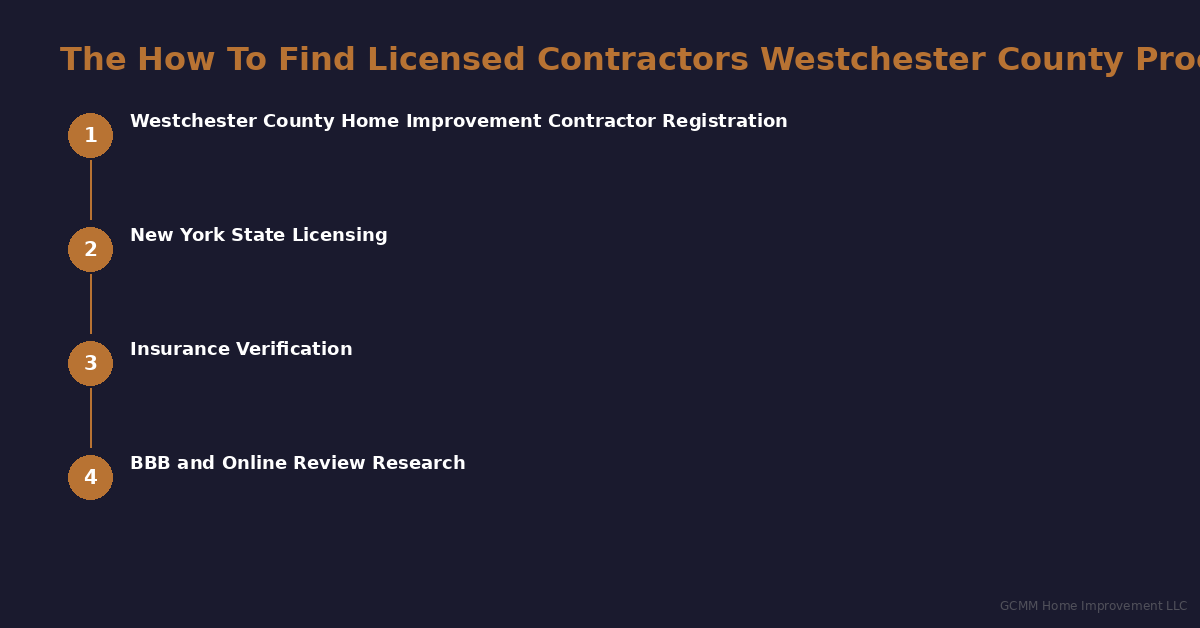
New York State requires home improvement contractors to be licensed through their county. In Westchester County, you should verify that any contractor holds a valid Westchester County Home Improvement Contractor license. Beyond licensing, require proof of both general liability insurance (minimum $1 million per occurrence) and workers’ compensation coverage. Ask for certificates of insurance naming you as an additional insured — any legitimate contractor will provide this without hesitation. If a contractor is vague about their licensing status or asks you to pull permits in your own name, that’s an immediate disqualifying sign.
Permit Management — Who Handles Bedford Town’s Process
Bedford Town’s Building Department (located in Bedford Hills at 321 Bedford Road) manages all residential construction permits. A qualified basement finishing contractor will handle the permit application on your behalf, prepare the required drawings, and schedule all required inspections — typically framing inspection, rough electrical, rough plumbing, and final inspection. Ask any contractor directly: “Will you obtain and manage all permits for this project?” If the answer is anything other than an unambiguous yes, that’s a red flag.
Moisture Management Expertise
This is where Bedford projects diverge from simpler markets. Given the area’s topography and the age of most homes, a contractor who doesn’t proactively raise moisture management as a first conversation topic either lacks experience with this type of construction or is cutting corners. The right contractor will assess your foundation walls, look for evidence of past water intrusion, evaluate your current grading and downspout drainage, and make a specific recommendation — even if that recommendation costs you more upfront. Skipping waterproofing to lower the initial bid is the single most common cause of basement finishing projects that fail within 5 years.
References and Portfolio Specificity
Don’t just ask for references — ask for references from Bedford, Katonah, or Bedford Hills specifically. Contractors who have worked in these neighborhoods understand the nuances of local construction: the age of the homes, the soil conditions, the permit process, and the finishes that resonate with the local buyer profile. A portfolio of finished basements in densely developed urban areas doesn’t translate directly to the demands of Bedford’s estate-style homes.
Written Scope and Contract Detail
Your contract should specify: the exact square footage being finished, all materials by brand and specification, the payment schedule (never pay more than 10–15% upfront), the permit responsibility, a project timeline with milestones, and a clear change order process. Vague contracts lead to disputes. A contractor who resists putting specifics in writing is telling you something important about how they intend to run your job.
Warning
Be cautious of basement finishing bids that come in significantly below competing quotes — particularly if the contractor proposes skipping the permit process. Unpermitted basement work is illegal, will not pass inspection at resale, may void your homeowner’s insurance, and leaves you legally exposed if the work causes injury or property damage. The Town of Bedford actively enforces residential construction permit requirements.
Return on Investment: What Basement Finishing Does for Bedford Home Values
Bedford’s real estate market provides an unusually favorable environment for basement finishing ROI. With median home values consistently above $1.2 million and buyer expectations at a premium level, finished square footage in Bedford commands a price-per-square-foot premium that amplifies the return on this type of project.
According to Remodeling Magazine’s Cost vs. Value data and local Westchester real estate market analysis, basement finishing in the Westchester market delivers approximately 70–75 cents of recovered value for every dollar invested at resale — a strong return relative to most renovation categories. In Bedford’s specific market, that figure can push higher for two reasons: first, the baseline home values support a higher absolute dollar return, and second, buyers in this price bracket are specifically seeking turnkey homes with finished lower levels that can function as home offices, au pair suites, or family recreation spaces.
Consider the math in practical terms:
| Investment Level | Project Cost | Estimated Value Added | Net ROI |
|---|---|---|---|
| Mid-Range Project | $55,000 | $38,000 – $44,000 | 69–80% |
| Premium Project | $80,000 | $58,000 – $68,000 | 72–85% |
| Luxury Estate Finish | $120,000 | $88,000 – $108,000 | 73–90% |
Beyond pure resale ROI, Bedford homeowners who finish their basements frequently realize quality-of-life returns that have tangible economic value. A finished basement that functions as a dedicated home office eliminates the need to lease commercial space. A basement configured as a legal accessory dwelling unit can generate rental income — though this requires specific zoning approval from Bedford Town. A basement playroom or recreation space directly supports family use of a home that Bedford’s often-demanding school year schedule makes essential.
The strongest ROI scenarios in Bedford involve: adding a full bathroom (always high-return), creating egress-compliant sleeping space (this can add a “bedroom” to the listing count under certain configurations, which directly lifts sale price), and incorporating a home office with quality acoustic separation — a feature that Bedford’s large professional commuter population specifically values.
For comparable ROI analysis in neighboring communities, see our pages on basement finishing in North Castle and basement finishing in Yorktown, where similar estate-style home profiles produce comparable return dynamics.
Pro Tip
If your Bedford home has a walkout basement — a feature common on properties along Pound Ridge Road, Guard Hill Road, and other hillside corridors — you may qualify to count finished walkout basement space as above-grade square footage under certain appraisal methodologies. This can meaningfully increase the appraised value impact of your project. Discuss this with your appraiser before you finalize your scope.
Material and Design Trends Bedford Homeowners Are Choosing in 2026
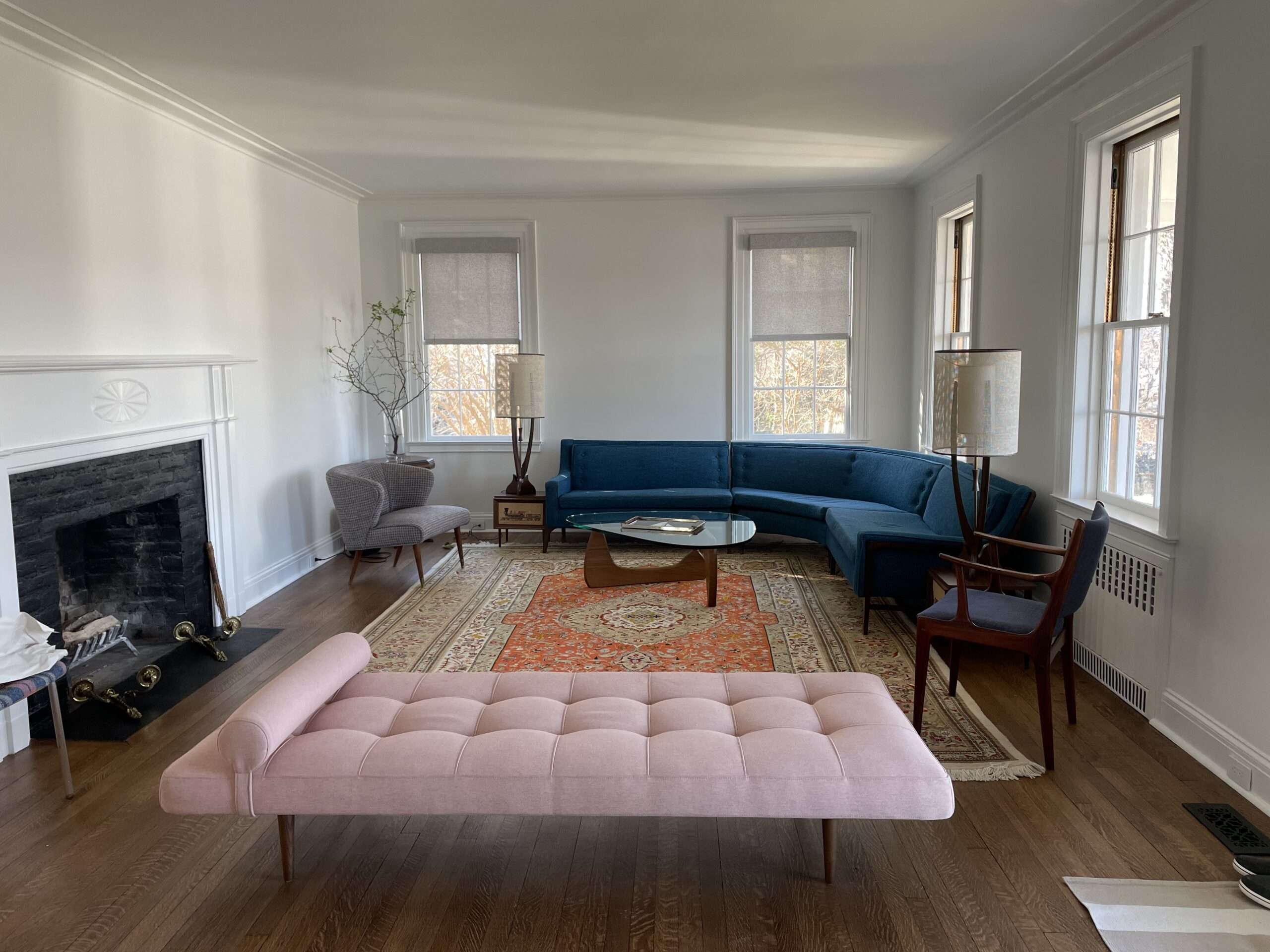
Bedford’s architectural identity — dominated by colonial estates, Shingle Style homes, Craftsman bungalows in the Katonah hamlet, and mid-century contemporaries on larger lots — shapes the design sensibility that homeowners bring to their basement finishing projects. The aesthetic goal for most Bedford homeowners is a finished basement that reads as a natural extension of the home above, not a clearly delineated “basement level” with the tell-tale signs of a budget finish.
Flooring: Engineered Hardwood and Luxury Vinyl Plank Leading the Market
The days of wall-to-wall carpet in basement spaces are largely over in Bedford’s demographic. Homeowners in this market are specifying wide-plank engineered hardwood (5–7 inch planks in white oak and French oak finishes are dominant in 2026) installed over a sleeper subfloor system that provides both thermal break and moisture protection. For spaces with higher moisture risk, luxury vinyl plank (LVP) in premium grades — specifically products with 8mm+ wear layers — delivers a convincing hardwood look with superior water resistance. True solid hardwood is not appropriate for below-grade installations and should be avoided regardless of contractor recommendation.
Ceiling Treatment: Drywall Over Drop Ceilings
Bedford homeowners with sufficient ceiling height (7’6″ or above after mechanical clearances) are strongly preferring smooth-finished drywall ceilings over suspended grid systems. The difference in perceived quality is significant, and with Bedford’s home values, the investment in a drywall ceiling finish is well-justified. For homes with tighter ceiling clearances — common in Bedford’s pre-1970 construction — a coffered or beamed drywall design can both accommodate mechanicals and add an architectural element that reads as intentional rather than constrained.
Home Office Buildouts: A Dominant Use Case
Bedford’s professional population — many of whom commute to Manhattan several days per week — has made dedicated home office space a primary driver of basement finishing decisions in 2025 and 2026. The specifications that resonate: acoustic separation between the office and family living areas (using staggered stud framing or acoustic insulation between walls), dedicated electrical circuits for workstation equipment, fiber/ethernet rough-in, and natural light via egress windows that are often enlarged beyond code minimum to maximize daylight penetration.
Wet Bars and Entertainment Zones
For the portion of Bedford’s finished basement market oriented toward family and entertainment use, wet bar installations have become a near-standard feature in premium projects. Current trends favor quartzite or leathered granite countertops over quartz (which reads as more kitchen-oriented), under-cabinet lighting in warm color temperatures, and undercounter refrigerator drawers over single-door mini-fridges. Built-in wine storage — either a dedicated cooling unit or a through-wall wine cellar connection — is also frequently specified in Bedford projects given the area’s strong wine culture.
Bathroom Finishes: Spa-Influenced
Basement bathrooms in Bedford are no longer treated as afterthoughts. Homeowners are investing in curbless shower designs with large-format porcelain tile (24×48 format in concrete and stone-look patterns), heated floors, and vanities with storage designed to serve the bathroom’s full-time use rather than occasional guest function. Radiant floor heat in basement bathrooms is particularly practical given the inherently cooler temperatures of below-grade spaces.
Insulation: Closed-Cell Spray Foam is the Standard
Building science has evolved significantly on basement insulation over the past decade. In Bedford’s climate — with heating degree days exceeding 5,500 annually — the thermal performance and moisture-control properties of closed-cell spray foam applied directly to foundation walls represent the current best practice. This approach eliminates the vapor-trapping risk of faced fiberglass batts against concrete, provides continuous insulation without thermal bridging, and contributes meaningful R-value (typically R-13 to R-21 per 2–3.5 inches of foam thickness). Contractors still recommending fiberglass batt insulation against foundation walls are behind current building science.
The Bedford NY Basement Finishing Process: From Permit to Punch List
Understanding what happens at each phase of a Bedford basement finishing project helps you plan around construction and set realistic expectations for your family during the process.
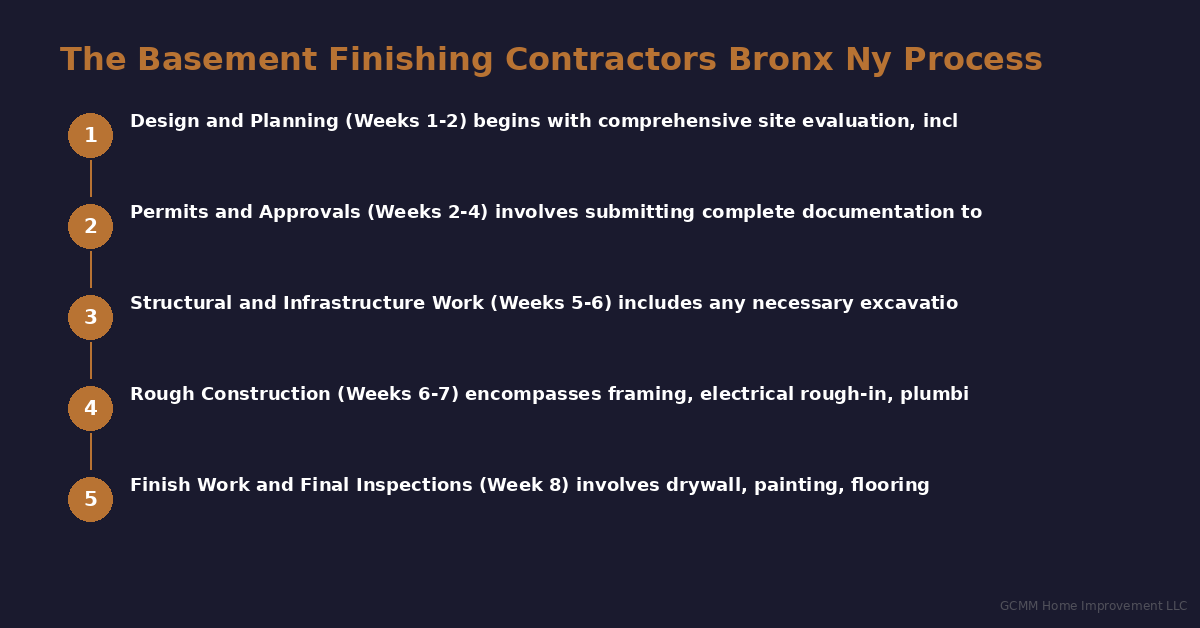
Phase 1: Assessment and Design (Weeks 1–2)
We conduct a thorough on-site assessment covering: foundation wall condition, existing drainage, ceiling height measurements throughout the space, current mechanical layout, and egress compliance. From this, we develop a floor plan, material specification sheet, and detailed written estimate. For Bedford projects, we also evaluate grading and downspout conditions that could affect moisture management recommendations.
Phase 2: Permit Application (Weeks 2–4)
We prepare and submit all required documentation to Bedford Town’s Building Department. This typically includes a floor plan, reflected ceiling plan (showing HVAC and electrical), and a plumbing schematic if a bathroom is included. Bedford Town permit review typically takes 2–3 weeks for residential projects of this scope. We handle all follow-up communication with the Building Department on your behalf.
Phase 3: Waterproofing and Structural Prep (Weeks 4–5)
If moisture remediation is required — drainage channel, sump installation, or wall treatment — this work happens before any framing begins. This sequencing is non-negotiable: finishing over an unresolved moisture issue is the contractor equivalent of painting over rust. Egress window installation also occurs in this phase, as it requires exterior excavation and is cleanest to sequence before interior framing begins.
Phase 4: Rough-In Work (Weeks 5–7)
Framing, electrical rough-in, plumbing rough-in (if adding a bathroom), and HVAC extension all occur in this phase. Each trade is sequenced to avoid conflict, and we coordinate all subcontractors (licensed electricians, licensed plumbers) on a unified schedule. Rough framing inspection from Bedford Town Building Department is scheduled at the completion of this phase.
Phase 5: Insulation and Drywall (Weeks 7–8)
Closed-cell spray foam is applied to rim joist areas and foundation walls per design. Fiberglass or mineral wool batts are installed in interior partition walls for sound control. Drywall hanging, taping, and skim coat finishing follows. Insulation inspection from Bedford Town occurs prior to drywall installation.
Phase 6: Finish Work (Weeks 9–11)
Flooring installation, trim carpentry, cabinet installation (wet bar, built-ins), tile work in the bathroom, painting, and light fixture installation all occur in this phase. This is the most visually transformative period of the project, and the sequence matters — flooring before trim, tile before fixtures, painting before final electrical covers.
Phase 7: Final Inspection and Punch List (Weeks 11–12)
We schedule the final inspection with Bedford Town Building Department and accompany the inspector through the space. Upon final approval, we conduct a walkthrough with you to identify any punch list items and complete all remaining work. Certificate of occupancy (or equivalent basement finish approval) is provided to you for your records — important documentation for your homeowner’s insurance and future resale.
Do I need a permit to finish my basement in Bedford, NY?
Yes, absolutely. Bedford Town requires building permits for any basement finishing work that includes framing, electrical, plumbing, or HVAC. This is not optional or discretionary — it’s a legal requirement under New York State Building Code as administered locally by Bedford Town’s Building Department. The permit process exists to ensure the work meets current code standards for egress, fire safety, structural integrity, and mechanical systems. Finished basement space completed without permits creates serious problems at resale: title companies and buyers’ attorneys increasingly require documentation of permitted work, and unpermitted improvements may need to be demolished or retroactively inspected at significant expense. At GCMM Home Improvement, we handle the complete permit process for every project we undertake in Bedford — from initial application submission through final inspection sign-off.
How do I know if my Bedford basement has a moisture problem before finishing?
There are several indicators to evaluate before any finishing work begins. Visible staining on foundation walls (efflorescence — the white chalky deposits — and dark organic staining) indicates past or ongoing water intrusion. A musty or damp smell, even in dry weather, suggests elevated humidity or active moisture migration. Rust stains on basement steel columns or structural connections indicate recurring moisture exposure. The tape test is a useful DIY diagnostic: tape a 12-inch square of heavy plastic sheeting to your foundation wall with duct tape, seal all edges, and leave it for 48–72 hours. Moisture on the back of the plastic (facing the wall) indicates water migrating through the foundation; moisture on the front (facing the room) indicates high ambient humidity. Either condition warrants professional evaluation before framing begins. We include a moisture assessment at no additional charge as part of our initial project consultation for Bedford homeowners.
What ceiling height do I need for a finished basement in Bedford?
New York State Building Code requires a minimum finished ceiling height of 7 feet for habitable basement rooms — that is, rooms intended for living, sleeping, or regular occupancy. Bathrooms and storage rooms have lower minimum requirements (6’8″ in bathrooms). The critical measurement is the finished height, meaning you need to account for the thickness of your chosen ceiling finish below the floor joists. Mechanical elements — ductwork, pipes, beams — that run below the floor joist line present the most common challenge. In many Bedford homes built in the 1960s–1980s, the structural floor framing and mechanical systems combined leave 7’2″–7’8″ of clearance — workable but requiring careful coordination of ductwork routing to preserve maximum headroom. During our initial assessment, we take detailed ceiling height measurements throughout the space to identify any areas that may present challenges.
How much does adding a bathroom to a Bedford basement cost?
Adding a full bathroom to a Bedford basement typically costs between $18,000 and $32,000, depending on finish level and the complexity of the plumbing rough-in. The most significant cost variable is whether your basement has an existing floor drain or below-slab plumbing stub-out for a future bathroom — if it does, connection costs are lower. If it doesn’t, adding basement plumbing requires either breaking the concrete slab to run new drain lines (adding $3,000–$6,000 to plumbing costs) or installing an above-floor macerating toilet system (a less expensive but more maintenance-intensive alternative). Bedford homeowners typically choose the below-slab plumbing approach for permanence and reliability. Finish-level choices — tile selection, vanity grade, shower enclosure type — can push bathroom costs higher in either direction. A half-bath (toilet and sink only) runs $9,000–$14,000 and is meaningfully simpler from a plumbing standpoint.
Can I create a legal rental apartment in my Bedford basement?
This requires careful evaluation of Bedford Town’s zoning code, which governs accessory dwelling units (ADUs) and accessory apartments. Bedford Town permits accessory apartments under specific conditions: the property must be zoned to allow them, the property owner must occupy the principal dwelling, minimum square footage requirements apply, and the unit must meet all applicable building code requirements for habitable space including egress, fire separation, and separate utility metering in many cases. The permitting process for an accessory apartment is more complex than a standard basement finish and involves a zoning review in addition to building permits. We strongly recommend consulting with Bedford Town’s Building Department and potentially a local real estate attorney before designing a basement finish specifically intended for rental occupancy. We have experience navigating this process and can advise you on what’s realistic for your specific property configuration.
How does basement finishing in Bedford compare to nearby towns like Katonah or Mount Kisco?
The technical construction requirements are largely consistent across this part of northern Westchester — the same building codes, similar climate conditions, and comparable home age profiles. Cost differences between Bedford and nearby communities like Katonah (part of Bedford Town) or
Ready to Get Started?
Contact GCMM Home Improvement LLC today for a free consultation and personalized quote.
Phone: (347) 961-7357 | Email: gary@gcmm.nyc